Tuesday, December 7, 2010

A Reflection on the Semester

Before my semester of Jour289i, I had never even considered signing up for sites like Twitter or Audioboo. I felt they were unnecessary to everyday life. I did not see a need for updating people constantly about what I was doing or where I was. Now that I have accounts with both sites and probably won’t continue to use them after the class is over, I do see merit in them.


New social networking sites like Twitter, when used correctly, can help spread information quickly. A story developing somewhere in the United States could be followed in another country, thousands of miles away. In this way, Twitter is a beneficial service, however when it is used for trivial things such as telling people things along the lines of, “Eating a bagel” then it is just wasted technology.


With new technology there are both positives and negatives. One such negative has been clearly shown with the most recent Wikileaks situation. In the wrong hands, information can become public and once it is out there, it can’t be taken back. On the other hand, with new technology, so many more things are possible that were never even thought of before.

All that being said, I’m not sure yet what technologies I will continue to engage in and what will just be left by the wayside. I do know for sure that I will not use Twitter nearly as much as I have over the past semester. Additionally, I will not be using mobile apps because I will not have the iPod touch anymore and my phone does not have mobile app capability. One thing I will definitely continue after the semester is keeping up with various blogs. I feel that they can provide information relevant to my interests regularly.


My advice to people who do not know that much about new technologies or social networks is to give them a try. After trying them out, decide what works for you and what doesn’t. Only after trying them will you know for sure whether it helps your life or in no way impacts it.


So with that, this will be last post during my semester of Jour289i. There might be more posts in the future, but we’ll just have to wait and see. 

Sunday, December 5, 2010

The Future of Technology and Travel


“Can you give me the address so I can plug it into my GPS?”

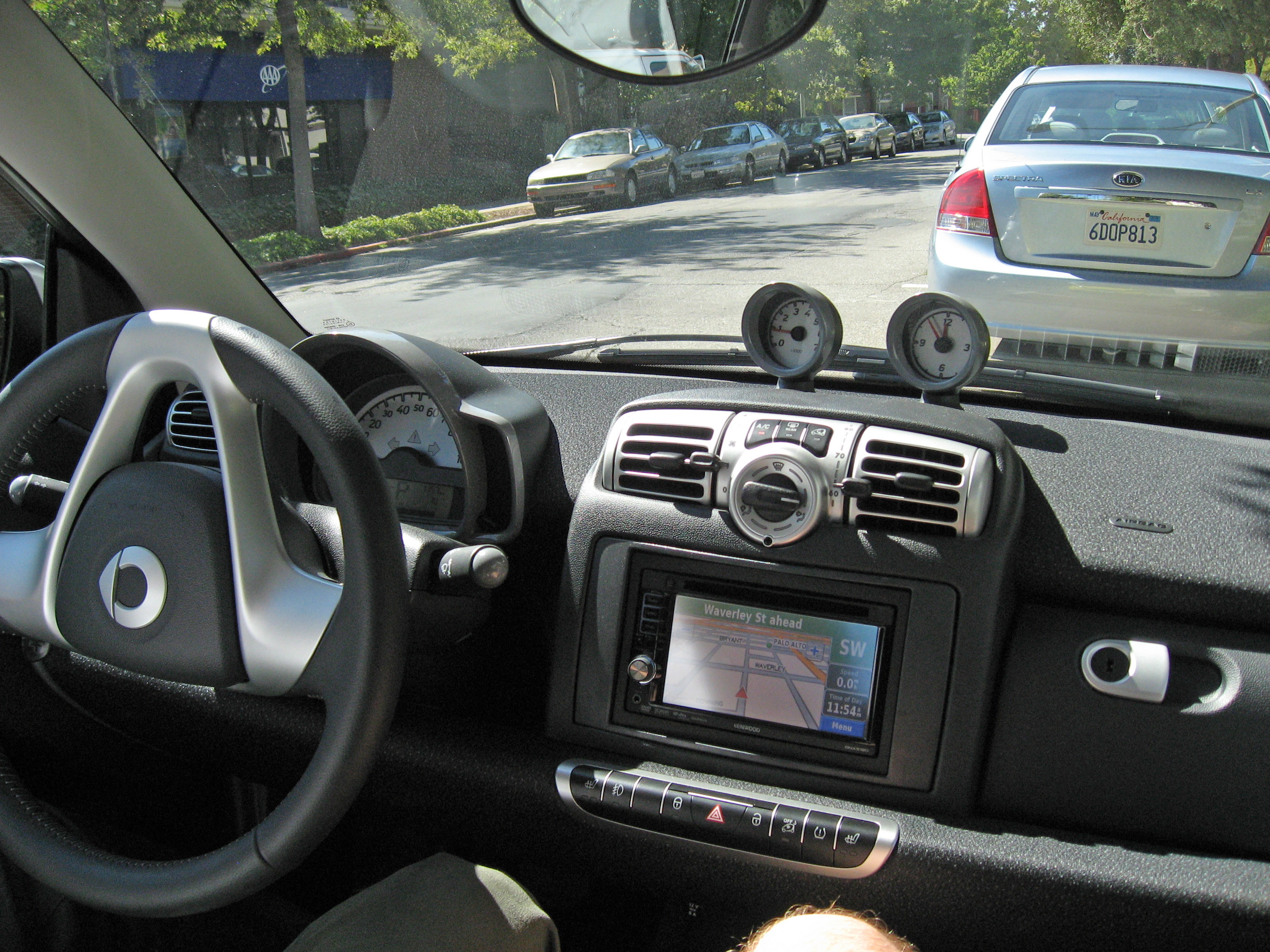
This question has become more frequent in a lot of peoples’ lives due to emerging technologies available to the general public. People rely more on technology to guide them to new places and new experiences. Without a doubt, technology has drastically changed the way people travel forever. With things like GPS devices, smart phones, and new scanners at airports travelling will never be the same.

http://bit.ly/ezG0BY
GPS, or Global Positioning Satellites, is the biggest change to travel. Just a handful of years ago, when people wanted to go somewhere, they would take out the map and figure out a route. Now, people have the option of using GPS. It is becoming such a popular option that more and more cars now have it as a standard feature. Similarly, GPS is showing up as a standard feature in smart phones. Cnet Reviews has a short article and review about this particular feature. They review just six of the current phones, operating on both Android and iOS, with GPS technology built-in. And with smart phones becoming more popular according to an article from Mashable.com, the use of GPS on mobile devices will only increases.


Another aspect of travel that is changing is that of airport security. A while back I wrote a post about new scanners being used at airports. Well over this past holiday travel rush there was a big thing about the new scanners. The TSA has implemented the new full body scanners in more airports and this has caused an uproar amongst some of the public. While the technology is brand-new and cutting edge, some people do not like it due to privacy rights. An article from The New York Times talks about the issue of privacy and the scanners and a protest of opting out of the scanners that was planned for the day before Thanksgiving. Travelling through airports has definitely changed.

GIS, or Geographical Information Systems, is not directly related to travel, but is related to my major. GIS is all about using satellite images to track patterns in all types of things. It can be used to see how sea level rising is affecting the land or how the earth plates are moving. As GIS becomes even further developed it will also be used more in urban planning and population and demographic studies. As a testament to the bright future of GIS, Maryland has both a major and minor in GIS studies. More people will know about GIS in the near future. Below is a video briefly describing GIS.

These examples are just a few of the many changes to travel because of emerging technologies. There is no doubt in my mind that technology will continue to make its way into everyone’s travels. Within the near future, a bigger percentage of people will have GPS capabilities in their pockets on their mobile phones. They will be able to go places with only an address. While some people may think that technology is hurting travel, I would say that it is helping and will only continue to do so. 

Wednesday, November 17, 2010

Booking Flights with Apps

Everyday it is possible to do things with apps once thought to be impossible. One such thing is booking flights straight out of an app without even needing to go to a web browser. Multiple airlines now feature apps with such capabilities. 

I took some time to explore apps for booking tickets for flights. After a bit of searching I found that there is a small group of such apps. Both Sourhwest Airlines and Continental Airlines are among this group of companies trying to keep up with the times. I tested both apps, which are available for free, and you can indeed book tickets straight from the mobile device being used. They are both easy to follow step by step apps leading to eventually entering payment information and booking the tickets. All of this was done straight from the app without having to use a web browser to complete the transaction. 

I also tried out apps that were not directly related to an airline but found that when trying to actually book the ticket you are linked up to the companies website instead of using the app to complete the transaction. 

Below is a slideshow of screenshots from the Continental and Southwest apps. 

Sunday, November 7, 2010

Reaction to Middle East Panel


About a week ago, my Jour289I class took a break from our normal discussions to have a guest panel of journalists from the Middle East. There were eleven countries represented from across the whole region. It was definitely an interesting experience learning from journalists in those countries. It was also interesting to see how different each country was in terms of what they can report and how easily people could access good journalism in the various countries.

One of the reporters particularly stood out to most people. She was a reporter from Saudi Arabia. She was telling us about how hard it was to be a female reporter in the country because of the various restrictions places on women in the country. For instance, there is a certain age that women have to be in order to drive or take a taxi in the country. Since she was not old enough to do either of these things, it was difficult for her to make it out to the scenes of various stories to report on them.

Another thing that caught people by surprise was that there was a general agreement among most of the journalists that they can not write stories about their monarch, president, or who ever was in charge. Being an American, this was quite interesting. Since there are always stories about the president (almost every president) doing things incorrectly or how they are bad for the country, it was interesting to hear that they can not even write criticism about their leaders.

Overall, it was a good experience to hear from the journalists from the different Middle East countries. It presented a type of journalism I was not used to and I’m glad I got to hear from the panel. 

Sunday, October 31, 2010

Photojournalism

In this photo, I was trying to capture the essence of the bike trail. I did so by getting multiple elements all in one photo. These elements were the cyclist, the trail, and the sign for the East Coast Greenway trail. By not centering any of these items and employing the rule of thirds, I was able to have the focus be on all three pieces. 

This photo also employs various techniques mentioned in class. The main technique is repetition. There are many canoes and they are arranged on the trailers which puts them in a nice order. However, this repetition is juxtaposed with the fact that they are not all the same color or shape. This makes the arrangement more interested and appealing.